
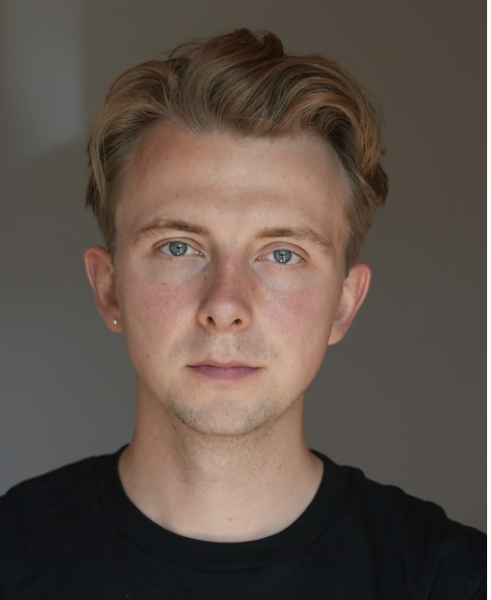
Jonny-Bix Bonkers
In what way did the CAS in Curating change your ideas about curating? What have you gained from any of these changes?
The program gave me a much-needed foundation in curatorial practice. Coming from performing arts and later moving into the field of digital and media arts, I had always worked intuitively but never really had a systematic understanding of what curating entails, how it has developed historically, and how it is deeply connected to ideologies and dominant worldviews.
The CAS helped me to see curating not just as the act of selecting or displaying artworks, but as a way of engaging critically with cultural narratives and institutional frameworks. It opened my eyes to curating as a discursive and political practice and helped actively reflect on prevailing assumptions.
What I gained above all was a new level of self-reflection in my artistic and professional reflection: how do I create spaces for other people’s work, how do I shape frameworks for dialogue, and what does it mean to curate in a time when art production itself is becoming increasingly entangled with digital systems and infrastructures? In that sense, the program has helped me to articulate my own curatorial position with greater clarity.
What is your position at the moment?
I currently work as a research associate at the Hochschule für Wirtschaft und Recht (HWR) Berlin, where I teach and conduct research on storytelling, digital transformation, and sustainability. Alongside this academic role, I work as an independent curator focusing on performance and digital art.
My curatorial projects explore how artists critically engage with technological systems, whether it’s algorithmic bias, data infrastructures, or the cultural imaginaries surrounding artificial intelligence. For me, science and art are in a reciprocal relationship: new scientific insights can find expression in art, while media art can generate speculative narratives that influence how knowledge is produced.
From this approach emerged Realtime Affairs, an ongoing event series in Berlin that creates a platform for exchange between artists, technologists, and theorists in the field of digital-performative arts. Another example is Attention Is All I Need, an online exhibition I curated with OnCurating and HEK Basel, which explored attention economies in digital culture.
What are your future aims?
In the future, I want to further deepen my focus on digital arts and their impact on human life and social structures. My aim is to work across artistic and academic contexts, building bridges between research and cultural production.
I plan to continue developing platforms that strengthen support structures for artists working with technology, and to explore new formats of artistic knowledge production — whether through exhibitions, workshops, or performances.
Conceptually, I am interested in questions like: Where are the limits of technological systems? What does “human in the loop” really mean in practice? How much control do we want to hand over to machines, and where do we insist on retaining agency?
Ultimately, my goal is to contribute to a critical, international discourse on art, technology, and society, while creating concrete spaces for collaboration, experimentation, and alternative futures.